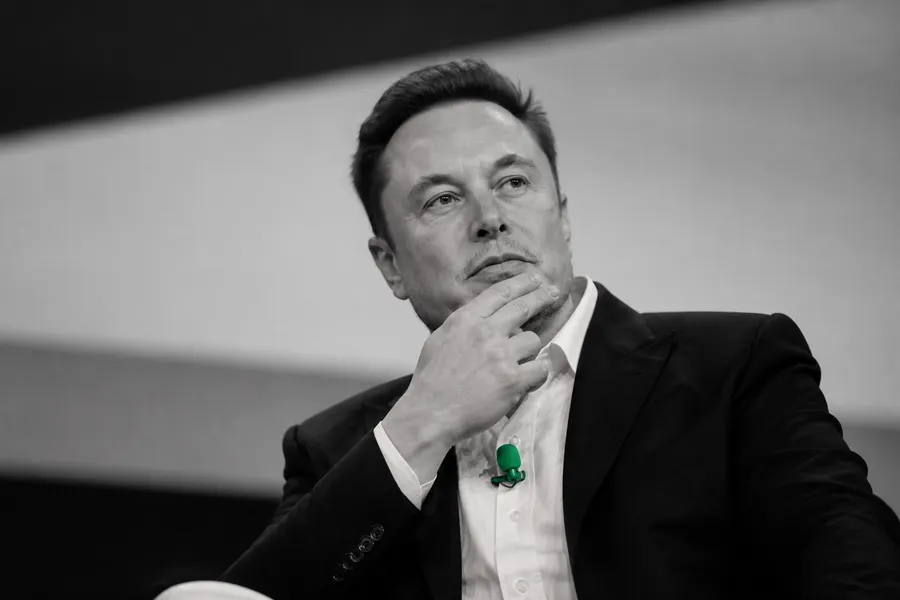
A regulatory filing revealed Thursday that Elon Musk holds a 48.4% stake in Space Exploration Technologies Corp (SPCX.O), a position valued at more than $900 billion that underscores the rocket company’s emergence as one of the world’s most consequential publicly traded assets.
For deal-focused investors, the disclosure crystallises both the concentration risk and the extraordinary voting control embedded in SpaceX’s dual-class share structure – factors that will shape any future capital markets activity around the stock.
Key Takeaways
- Musk’s 48.4% economic stake is worth more than $900 billion.
- He commands over 82% of SpaceX’s total voting power.
- Shares have rebounded 30% in August after a 33% post-IPO slide.
Market Reaction & Context
SpaceX went public on June 12 in a record-setting IPO that raised $85.7 billion and briefly pushed the company’s market capitalisation past $2 trillion, making it one of the largest market debuts in history 1. The stock subsequently gave back nearly a third of its value through the end of July, a correction broadly consistent with the post-IPO cooling seen across high-profile technology listings.
August has brought a sharp reversal. Shares have climbed roughly 30% month-to-date, driven by the company’s first quarterly earnings report since its market debut and the expiry of the first tranche of lockup restrictions – a catalyst pattern familiar to investors who tracked comparable mega-cap IPOs 1.
Anatomy of the Stake
The filing, dated as of June 30, shows Musk controls 6.42 billion shares in total, exercising sole voting and dispositive power over each of them 1. The position is structured across multiple vehicle types: 849.5 million Class A shares held through trusts where Musk serves as trustee, 3.92 billion Class B shares in those same trusts, 1.30 billion restricted Class B shares held directly by Musk, and 350 million Class B shares issuable on option exercise.
The Class B share structure is central to the governance story. Despite owning 48.4% of the economic interest, Musk has held more than 82% of SpaceX’s voting power since the IPO – a level of control that effectively insulates management decisions from outside shareholder pressure and is a key variable for any institutional investor modelling downside scenarios 1.
Earnings Catalyst & Revenue Surge
Earlier this month, SpaceX posted its debut quarterly results, reporting revenue growth of more than 90% year-on-year alongside an exponential increase in capital expenditure – figures that reignited investor appetite for the stock after its summer correction 1. Starlink, the company’s satellite-internet division, was cited as a primary driver of the top-line surge.
The scale of the capex expansion signals that SpaceX is in an aggressive reinvestment phase, a dynamic that compresses near-term free cash flow but could widen the company’s competitive moat in launch services and broadband connectivity.
Valuation & Outlook
At a market cap that briefly exceeded $2 trillion, SpaceX was priced at a multiple that left little room for execution shortfalls, which explains the swift post-IPO selloff 1. The August recovery, coinciding with lockup expiry, suggests the market interpreted the initial selling pressure as technical rather than fundamental – though additional lockup tranches remain outstanding and could introduce further supply-side volatility.
Musk’s dominant voting position means that strategic pivots – whether a spin-off of Starlink, additional equity issuance, or a potential secondary offering – rest almost entirely at his discretion, a governance dynamic investors in dual-class structures such as Alphabet or Meta will recognise.
Conclusion
Thursday’s filing does more than headline a personal fortune; it provides the clearest picture yet of how power and economics are apportioned inside one of the most closely watched post-IPO stories of the decade. With further lockup expirations ahead and a capex trajectory that will require monitoring each quarter, SpaceX’s ownership structure is as much a catalyst variable as any product launch on the company’s manifest.
Not investment advice. For informational purposes only.
References
1Reuters (August 13, 2026). “Musk discloses 48.4% stake in SpaceX in regulatory filing”. Reuters. Retrieved August 13, 2026.